
Maui County Traffic Warrants Explained
Traffic matters in Maui County run through the Hawaiʻi State Judiciary's Second Circuit, mostly at District Court and the Traffic Violations Bureau. A traffic crime demands an appearance. Skip that date and a bench warrant can follow. The Judiciary's examples include driving without a license, DUI, reckless driving, racing, open-container offenses, and some no-insurance matters. That list shows how a case gets treated, not a roster of warrants. Civil infractions play by different response rules. An unpaid ticket is not automatically a warrant. A registration stopper is a separate record. Public Maui materials use "bench warrant," "arrest warrant," and "warrant." If capias or capias pro fine appears on your docket, that label is not a standard public portal one here. Ask the clerk what Hawaiʻi event it denotes.
The Maui County 21-Day Response Window
After a moving citation in Maui County, the Judiciary gives a motorist 21 days to respond at the designated District Court or Traffic Violations Bureau. Read the citation first. Required appearance, contest, and payment paths differ. Ignore a required traffic-crime date and a Maui County case can drift toward a bench warrant. A citation may take 13 days or more to enter the court system. Until then, online or phone payment may not work. Payment can also stay blocked once more than 21 days pass or when appearance is required. A missing payment button proves nothing either way. Call Traffic Violations at (808) 244-2800 for the real status.
Checking for a Traffic Warrant
Use every channel that fits the court record. Start with eCourt Kōkua, accept its disclaimer, and search a known case or the person's own party information. A vehicle search can use plate or VIN. It is not a full warrant roster. Review the court, location, status, last updated date, events, offenses, hearing data, and public bail or bond fields. Then call Second Circuit Traffic Violations at (808) 244-2800. Ask whether a missed appearance produced a bench-warrant event. Ask what the court expects next, whether appearance, a recall motion, payment, or another step. Island routing matters in Maui County, so keep Lahaina District Court at (808) 661-0970, Lānaʻi at (808) 565-6447, or Molokaʻi at (808) 553-1100 handy. Verify current arrangements before you travel. The official traffic-court contact page maps the Second Circuit locations.
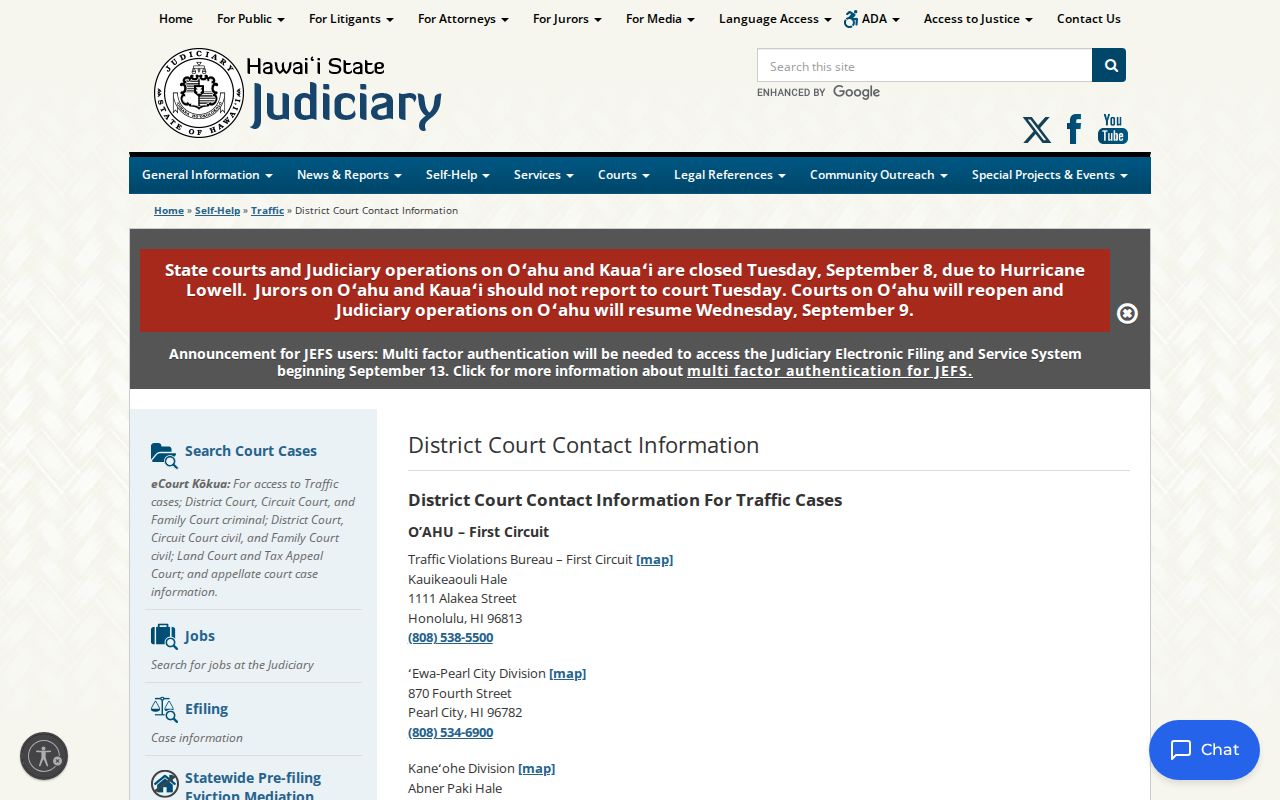
One Wailuku phone does not cover every island. A Maui County traffic warrant question may route to a courthouse closer to you.
The Maui County Motion to Recall
The Maui District Court forms index carries an official traffic motion to recall a bench warrant. Filing it requests judicial action. It does not clear anything by itself. The form identifies the defendant, case or citation, warrant order date, proposed hearing date, signature, and certificate of service. Its Rule 43 language may support a plea route where the form allows. Ask the clerk for the current form, deadline, filing method, service step, and hearing requirement. The prosecutor appears as a notice recipient. That does not replace the court. A filed motion is not a granted one. CourtConnect abbreviations like MRBW and RBW are clues, yet the signed order is the stronger proof that a Maui County warrant ended.
Inside a Traffic Warrant Record
A Maui County traffic case page can bundle citation data, case status, court events, and financial or clearance information. Each field answers one narrow question. Read them together. Confirm any warrant conclusion with Traffic Violations.
| Citation number | The number printed on the ticket, shown here only as YOUR CITATION NUMBER. |
|---|---|
| License plate | Used with the citation number in the official lookup and payment flow. |
| Court and location | The District Court or Traffic Violations Bureau route controlling the case. |
| Case status | A public label that must be read with events and last update. |
| FTA or warrant event | A docket clue concerning failure to appear or bench-warrant action. |
| Amount or referral | Public balance or collection information when available. |
| Stopper event | OLS, OLC, or OLCI data that is distinct from warrant status. |
Payment Is Not Maui County Warrant Recall
The Judiciary takes some citation payments online or by phone with the citation number, plate, and a Visa or MasterCard. The phone payment line is (800) 679-5949. Pay in person at any district court. By mail, send a check or money order in U.S. dollars payable to DISTRICT COURT, and never mail cash. A dishonored payment adds a $25 service charge. The official traffic payment page lays out the court's channels and limits for Maui County drivers.
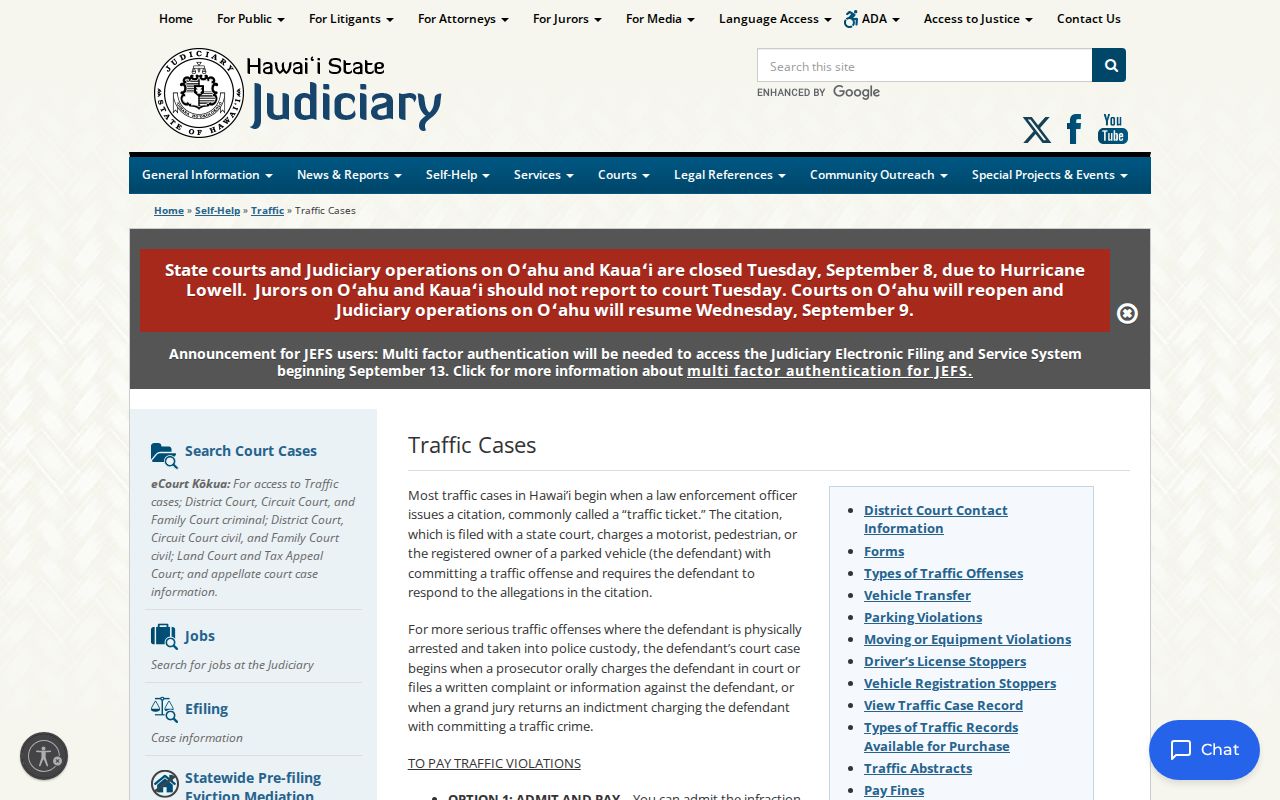
Payment controls can settle an eligible balance. A receipt alone is not a Maui County bench-warrant recall order. When a warrant event exists or appearance is required, ask which action addresses it, and do not assume a payment plan exists. Never use a caller's payment link. The court's status and signed order control.
How to Pay or Lift a Traffic Warrant
Start by pinning down what the Maui County traffic record actually is. It could be a payable civil citation, a required traffic-crime appearance, a bench warrant, a collection referral, or a stopper. Some of these stack together. Each one calls for a different court response, so a Maui County warrant lookup helps you spot public case events before the clerk confirms them.
- Locate the case using the citation, plate, case ID, or party search.
- Call the proper Traffic Violations or island court counter and state the exact event shown.
- Ask whether payment, appearance, a motion to recall, or collection action is required.
- Use only the payment or filing channel named by the official court.
- Obtain the order, receipt, and any stopper-clearance proof.
Keep proof: A payment, filed motion, or collection receipt does not by itself show that a Maui County traffic warrant was recalled.
If the Maui County Case Went to PCR
Once a Maui County case lands with Pioneer Credit Recovery, the court no longer accepts payment on the referred account. Use the PCR portal. Or call (866) 802-0053. A 21% collection fee applies. The court's page also covers reference numbers, ZIP codes, card payment, stoppers, and a motion-to-set-aside process. Ask the court to confirm current conditions before paying; the Judiciary collection page explains both PCR referral and clearance.
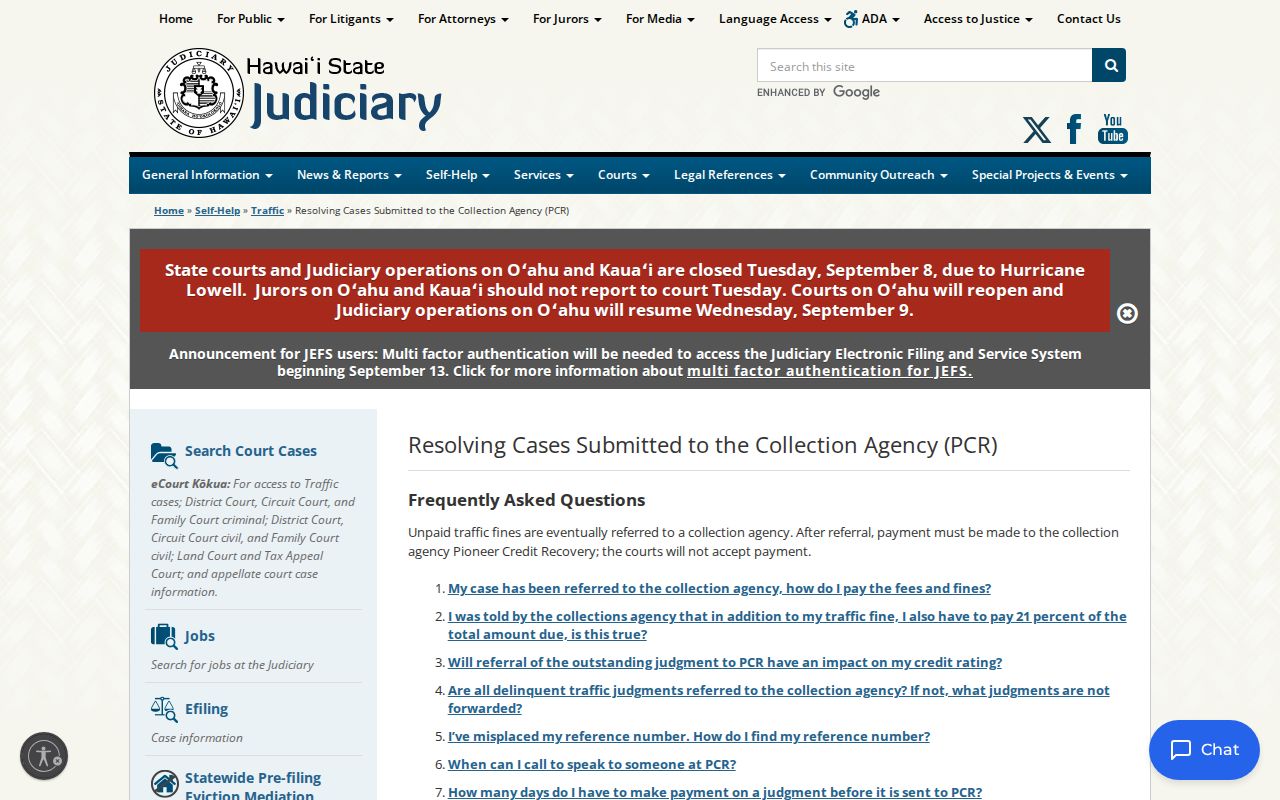
Paying collection debt is not the same as clearing a stopper, and neither equals a judge recalling a Maui County traffic bench warrant. If the court grants relief, ask how to get the certified order. Ask what proof clearance requires. Updates rarely come the same day. An OLS event marks a stopper, while OLC or OLCI marks clearance or its issuance.
Traffic Warrants, FTA, and License Holds
A traffic warrant, a failure to appear, and a license hold are separate events in a Maui County case. Confuse them and you visit the wrong office with the duty still open.
| Record | Meaning | Who confirms | Typical proof |
|---|---|---|---|
| Traffic bench warrant | Court order tied to missed required action | Issuing District Court | Recall or quash order |
| FTA event | Docket notation of failure to appear | Court clerk | Updated docket and court order |
| Registration stopper | Separate restriction or collection event | Court and stated clearance channel | Clearance document |
| Collection referral | Debt routed to PCR | Court or official PCR channel | Receipt and any required court order |
Maui County Traffic Courts Are State Courts
Maui County has no incorporated cities. There are no municipal courts either. A ticket from Kahului, Kihei, Wailuku, Lahaina, Pukalani, Molokaʻi, or Lānaʻi creates no separate city-court warrant. Everything runs through state court. The right stop is a Second Circuit District Court or Traffic Violations Bureau office, with MPD serving as the county police agency. The Maui court-process page lays out the state court types and local routing.
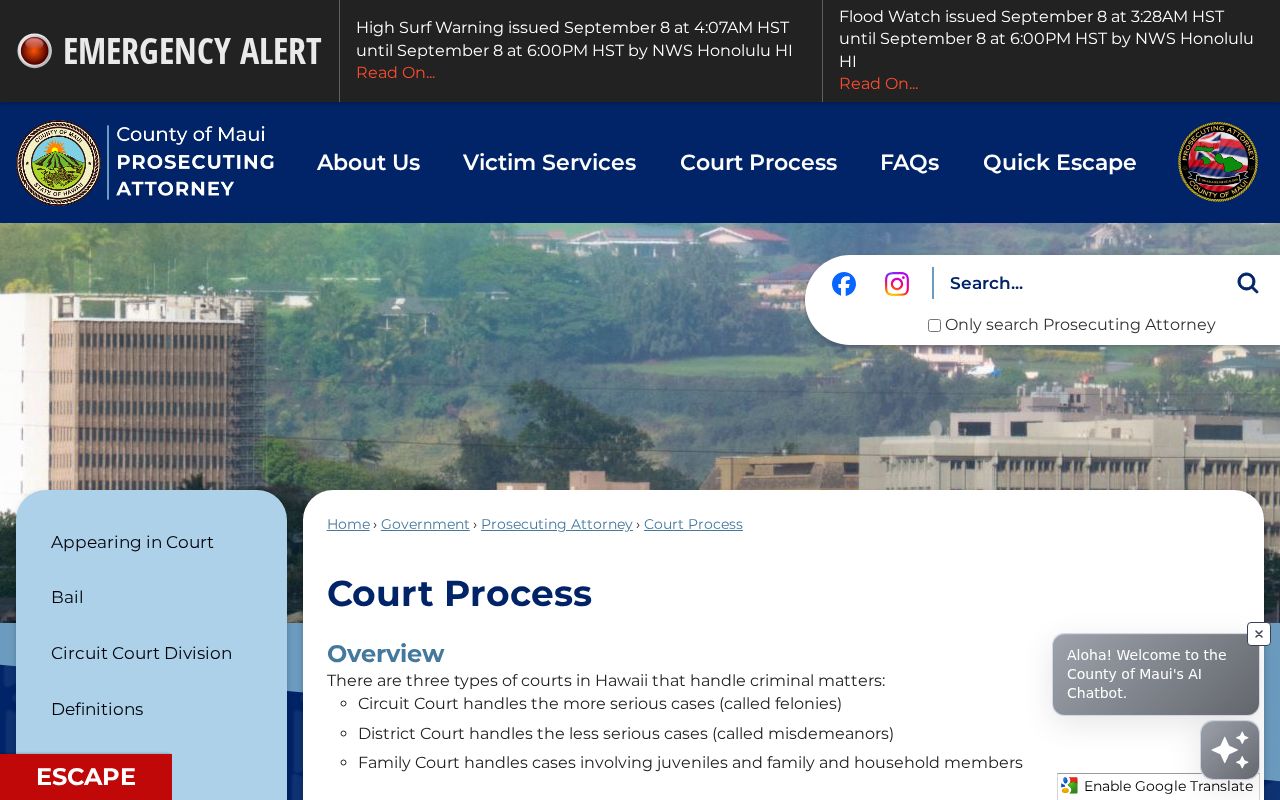
A Maui County traffic warrant is a court record. It is not a motor-vehicle history or an insurance product. It is not a municipal record either. MPD and the Judiciary warn about scam messages citing fake citations and warrants. Officials never demand gift cards, cryptocurrency, Cash App, Venmo, or card data through an unsolicited threat. End the contact and call the court through its official page.