
Maui County Active Warrants Explained
No Maui County agency publishes a complete public active-warrant database. The Judiciary, the police department, the Sheriff Division, and the state office that handles records each leave that roster unpublished. eCourt Kōkua comes closest: it is the statewide public case tool, though not a warrant list. When a record is public, it can show case status, events, offenses, and bail or bond fields. "Active" or "outstanding" simply signals process that looks unresolved. A warrant may grow out of probable-cause proceedings, a missed court appearance, or failure to follow an order. Later docket entries can include a motion to recall, an order, a return, or a service event. Only the court can say which event controls now.
No Complete Maui County Warrant Roster
With no Maui County roster to scan, the warrant check runs case by case. Start in eCourt, then call the right Second Circuit counter. District clerks answer at (808) 244-2846, Traffic Violations at (808) 244-2800, and the non-confidential Circuit legal-documents line at (808) 244-2969. The Second Circuit contact page also routes Lahaina, Hana, Lānaʻi, and Molokaʻi cases.
Quick answer: A commercial or copied name list cannot replace the current Maui County court record.
Have your details ready before you call. Give the clerk a case number, citation number, full legal name, and the location on the notice. Ask whether an FTA or warrant event exists, whether it remains effective, and where the official filing or appearance instructions live. That framing gets Maui County answers fast.
How Maui County Tracks Active Warrants
Maui County warrants move through more than one system, and none of it adds up to a public search. The Judiciary runs JIMS and electronic bench-warrant infrastructure. MPD Records processes legal documents, warrants included, and reports maintaining active NCIC entries. The State Sheriff Division serves process and supports court operations. None of that internal machinery creates a public statewide warrant lookup. Public eCourt data can lag real events or leave out whole classes of records. No Maui County office publishes a daily or weekly update schedule. Note: A missing entry does not prove there is no warrant, and a recalled one can stay visible until systems catch up. The issuing court holds the final word on status. MPD or the Sheriff can speak to records in their own custody. Ask neither for legal advice or a promise that a court order was recalled.
Maui County Status Codes as Clues
The official CourtConnect code table helps a reader follow a Maui County docket sequence. An abbreviation alone never proves an outstanding warrant.
- FTA
- Failed to Appear, often the event that starts a bench-warrant question.
- PCAW
- Probable Cause to Issue Arrest Warrant.
- MRBW
- Motion to Recall Bench Warrant, which is a request rather than proof of approval.
- MQSH
- Motion to Quash, a request to set process aside.
- RBW and RW
- Return Bench Warrant and Return on Warrant. Later entries still matter.
Treat the codes as vocabulary for a precise clerk question. Read any Maui County code with its date, court location, and every later order before drawing conclusions about an active warrant.
Inside an Active Warrant Record
A public Maui County record may show enough fields to route your question. The warrant document itself, plus operational detail, stays withheld. Write down exact values from your own case. The case ID is not a warrant identifier.
| Identifier | Case, citation, application, or process number; formats vary. |
|---|---|
| Issue data | Date, court, division, and location when public. |
| Type or reason | Bench, arrest, FTA, failure to comply, or other public label. |
| Charge | Offense description or class, which is not proof of guilt. |
| Bail or bond | Amount or condition if exposed; the court confirms current terms. |
| Status | Active, recalled, canceled, served, executed, or returned. |
Check the last-updated stamp. In Maui County records, a newer recall or quash order can change what an older warrant event means.
Active Does Not Mean Convicted
Each Maui County warrant type authorizes a different procedural action. An arrest warrant rests on a judicial probable-cause process. A bench warrant usually follows a missed appearance or failure to comply. A search warrant authorizes a search, not an arrest. The county's plain-language definitions distinguish bail and bench warrants.
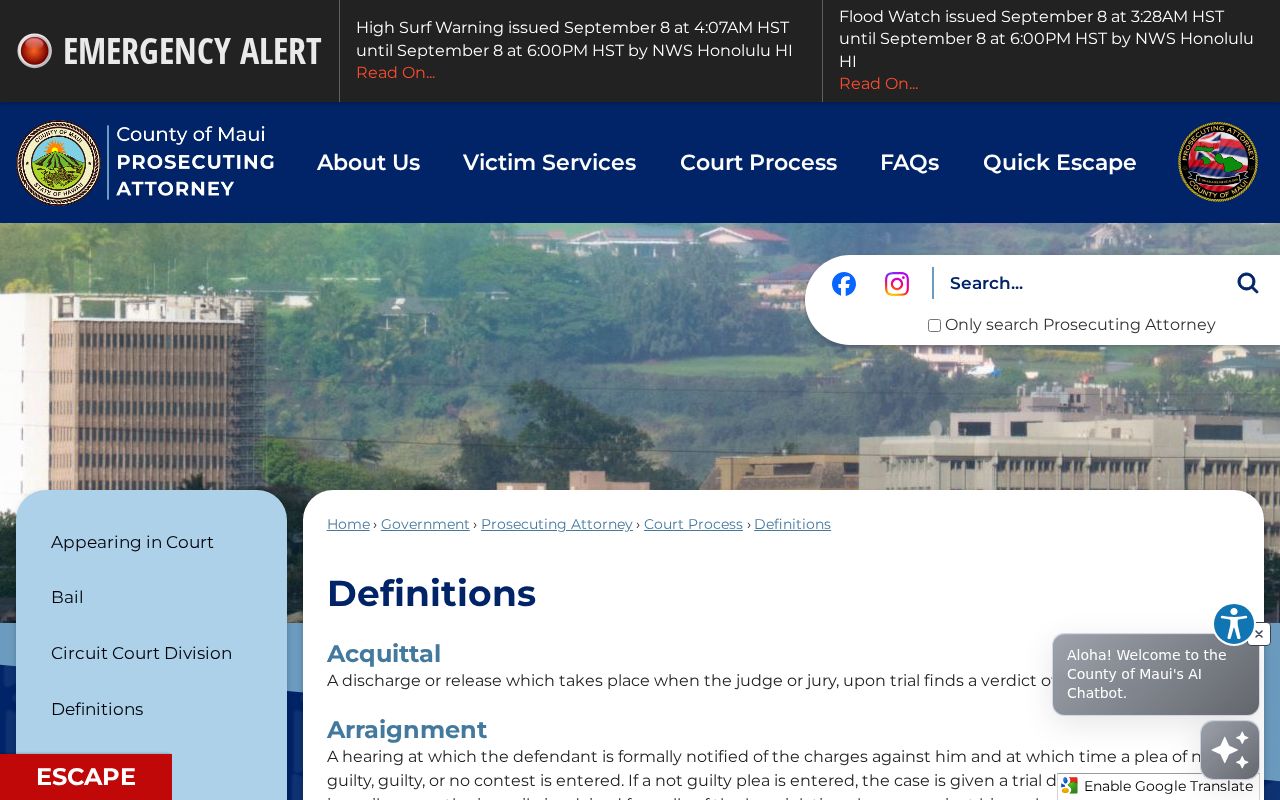
Those definitions keep a Maui County outstanding-warrant search aimed at process and resolution. They stop an allegation from reading like a verdict.
Warrant Roundups and Most-Wanted Lists
Hawaiʻi Attorney General partner material names Maui Crime Stoppers as a community program linking the public, media, law enforcement, and justice partners. Its tip route and any curated wanted content are not a complete Maui County active-warrant list. A person absent from the program may still have court process. The state partner listing itself carries the program's mission and contacts.
That context separates public safety tips from personal warrant verification.
Program rule: Visit Maui Crime Stoppers for its current program, but never treat its curated material as court clearance.
No Maui County office runs an amnesty or roundup event. Never assume a past or rumored event changes an active court order.
Maui County Sheriff Role Explained
Maui County does not operate a county sheriff's office. The Hawaiʻi State Sheriff Division is a different animal: a statewide agency providing court security, serving process, and transporting detained people. Its Maui Section sits at (808) 244-2900. The official page lays out the mission and contact context.
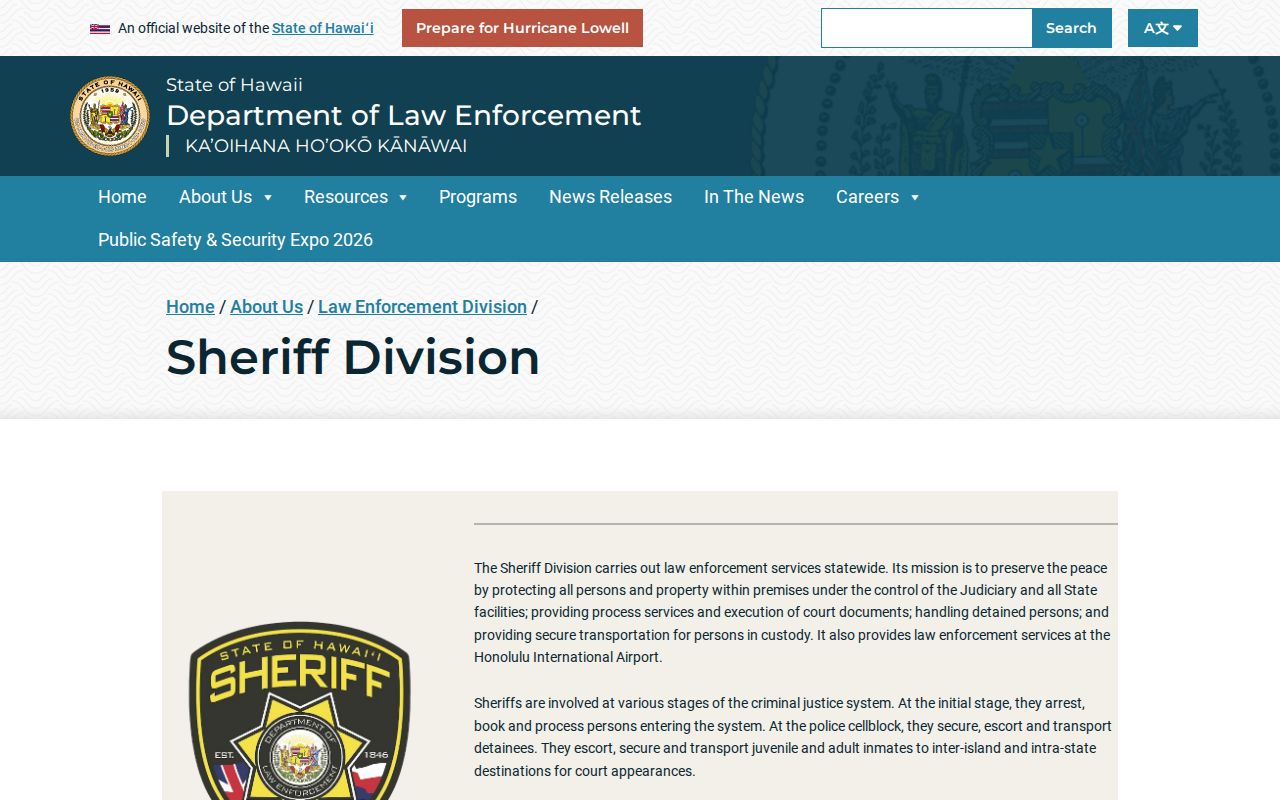
The statewide Sheriff is distinct from MPD and the Second Circuit clerk. Ask it about a sheriff-held service record, not a nonexistent county sheriff roster. For MPD-held warrant or legal-document entries, MPD Records is the better route. Court confirmation still matters, because agency custody and judicial status are different questions.
Maui County Warrant Records and Public Access
Hawaiʻi starts from openness. HRS §92F-11 presumes government records are public unless another law closes them. HRS §92F-13 carves out privacy, prosecution material, legitimate government functions, and court-ordered confidentiality, and HRS §571-84 seals Family Court and juvenile records. Those exceptions matter for warrants. Sealed affidavits, NCIC content, juvenile information, and protected personal details can sit inside an unserved warrant file and stay off any website. Nothing here forces a statewide or Maui County roster either. So ask the office that holds a document. Request the particular own-record copy you want.
When Your Name Is on the Warrant List
Confirm the entry with the issuing court first. Ask whether the Maui County warrant is still active and what case number controls it. Counsel, an appearance, bond, surrender, or a motion to recall or quash may each be the accepted route, depending on the judge. A motion is only a request until the judge grants it. Payment does not recall every warrant automatically.
Important: Consult a lawyer before surrendering; an active Maui County warrant can lead to arrest during police contact.
Keep the proof. Save the signed order, docket entry, or receipt that shows the result, then recheck the court record to confirm the status change. The full court-first steps sit in If You Have a Warrant in Maui County. Missed appearances follow the procedure in Bench Warrant Search. One warning. Callers demanding gift cards, cryptocurrency, Cash App, Venmo, wire transfers, or card details to cancel a warrant are running a scam. Verify through an official number you find on your own.
Maui County Records Requests Stay Focused
To request a Maui County record that MPD holds, use GovQA, fax, or mail and describe the exact own-record material you want. Add contact information, any known case or citation number, and photo identification when required. A representative needs signed authorization. MPD's 10-business-day report target is not a warrant-clearance deadline, and a police document may lag behind the court's newest order. Hawaiʻi UIPA guidance does not force an agency to build a warrant roster either. Redaction and withholding can apply. If MPD refers the request to the Judiciary, call the Second Circuit clerk about the Maui County case. When the State Sheriff served process, ask that division only for material it actually holds.